
I started working on this knowledge framework a couple of months ago, and we’re still in the experimental phase, trying to work out how it will work, with the intention of sharing my experiences and the lessons I’ve learnt.
However, a recent paper on the impact of AI (Artificial Intelligence) and search engines has made me realise that I need to split the levels up. This is due to the expertise paradox, which relates to how experts can find the information they need more easily on a search engine than someone who is a novice. But the ease of finding information on the web (known as the Google effect) makes it harder for someone to become an expert.
The same paradox is going to occur with AI, and one of the key points of this AI knowledge framework is to help us protect and improve our cognitive capabilities by using a Personal Knowledge Management system in the form of a Zettelkasten, and then consider how we can use AI to boost our cognitive abilities.
This paradox has led me to believe that I need to split my knowledge framework into two. Framework level 0, which is suitable for beginners, while Framework levels 1 and 2 are for intermediate users.
Why I decided to write this post
I’m writing this post because I’m excited about AI and the potential it has to assist me, but I’m also worried about the cost of AI. One of the things I’ve learnt from using my Zettelkasten is that some friction is needed to learn.
I’m afraid that many of us will get rid of this essential friction through the use of modern technology, and specifically in this case, generative AI. That isn’t to say we shouldn’t use AI at all, which is where this AI framework comes from.
One of the reasons why I wrote a number of posts encouraging the use of PKM, and particularly Zettelkasten, during 2025 was that I believe the actual process can help protect your cognitive abilities. These reasons include:
- Creating notes in your own words
- Encouraging you to see how new ideas link in with existing ideas
I find that my Zettelkasten gives me space to think and incorporate outside ideas into my own understanding of the world.
AI, if used appropriately, can strengthen your Zettelkasten as it can be used to give voice to your Zettelkasten. But it could potentially destroy all the benefits of using your Zettelkasten.
That’s where the AI knowledge framework comes in.
What is the AI knowledge framework?
The AI knowledge framework currently consists of three distinct levels, all designed with the aim of both protecting the cognitive load required for learning and thinking about my ideas in my Zettelkasten.
But also to use AI to streamline the process of managing my fleeting notes and to use AI to improve my thinking, both as a thinking partner and as a devil’s advocate.
Whilst this post is about level 0 of the framework, I think it’s worth looking at each in turn.
Level 0: The skill of strategic delegation
This level uses AI to carry out the tedious, low-value tasks you encounter whilst maintaining your Zettelkasten, with the aim of freeing up more energy and time for deeper thinking.
Level 0 tasks include tag suggestions for your permanent notes and suggesting other backlinks to your permanent notes. In both these cases, you should still look to do them first, as it’s part of the thinking process, but it can help you identify gaps you might miss. Never add anything that doesn’t seem right.
Other tasks I’ve set up that will sit at this level include automatically adding links to my permanent notes in my A to Z index.
Level 1: The skill of critical refinement
At this level sits AI-generated note summaries. I like to highlight the fleeting note first, but if I find the original note to be either quite complex, long, or both, I will normally ask the AI to write a summary plus any other points that it thinks I might want to consider.
I haven’t yet done this, but I know I will from time to time. I have a long, complex fleeting note that is really hard for me to process. In these instances, I would use the AI summary as my source.
However, as with all source material, it’s vital that you review it critically and engage with the source material. You could do this by following the Zettelkasten process for creating literature and permanent notes.
Level 2: Using AI as a thinking partner
At this level, we use AI as a dialogue partner. This can be to explore concepts as a thinking partner or to get it to play the role of devil’s advocate and ask it to identify weaknesses in your argument.
I’ve also added the following into the personal section for Claude Desktop and Obsidian Co-pilot: “Give honest and constructive feedback.” I want AI that challenges me. Its main purpose is to help me to learn and become the best I can.
I would also add to this level a tendency I have of asking Claude, often on my tablet, for a definition of what a word means in that context. On occasions, it might be just to start a conversation on something that has really resonated with me.
These conversations can often be quite insightful, some of it due to the fact that I have to construct my thoughts into the written word, and secondly, the AI can mention something I might not have considered.
If the conversation was insightful, I will get AI to create a note, and I will look to process it into my Zettelkasten. Any literature or permanent notes created from it will be written in my own words. It is the start of the process, not the end.
Why level 0 is enough for beginners
The AI cognitive ability paradox is that you need cognitive skills to use AI effectively, but these cognitive skills are the very skills AI can potentially undermine.
When AI or other technology does cognitive work for us, our mind isn’t doing it, and we will over time lose that ability to do that work. It’s a bit like asking a robot to go to the gym for you and do your physical exercise.
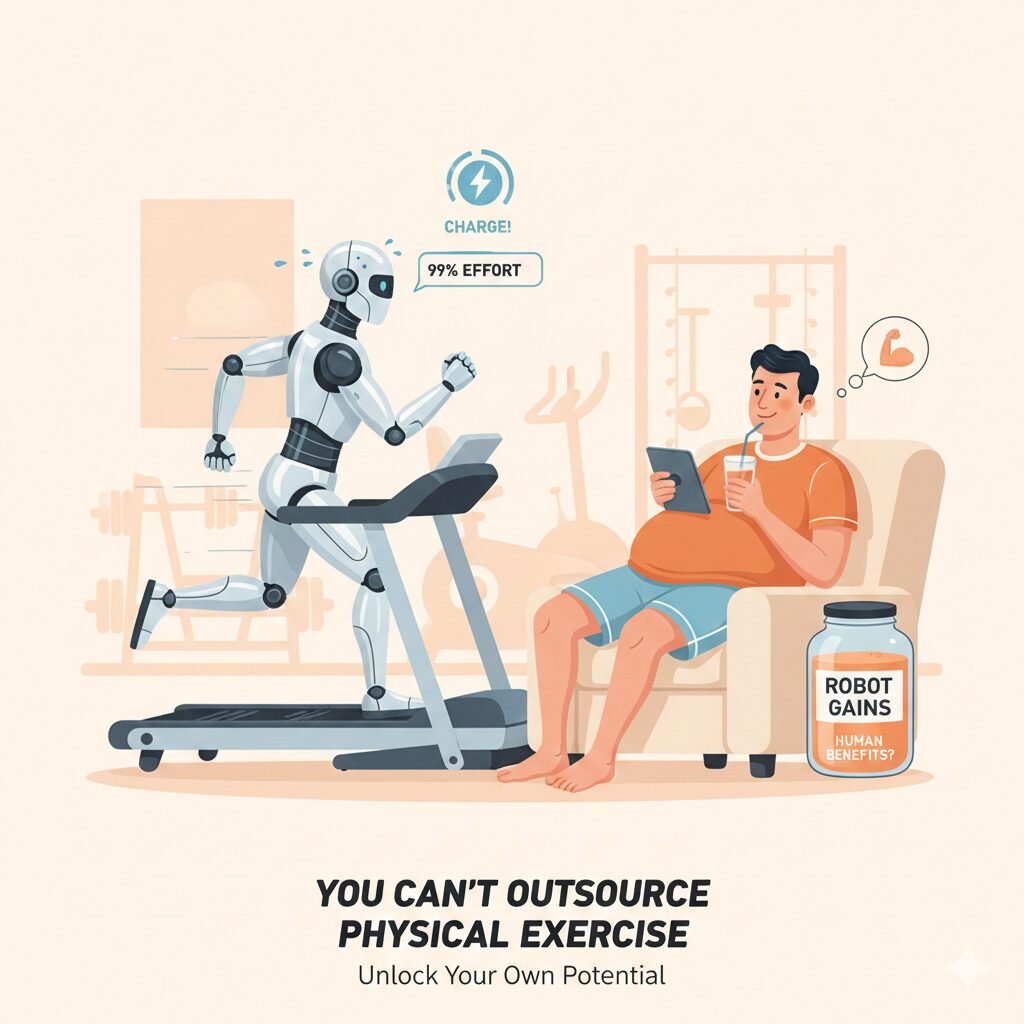
As I processed this insight from the paper I was reading during a conversation with Claude, I realised that we have to advise beginners to the Zettelkasten method to stick with level 0 until they have assimilated the Zettelkasten method into their process and understand why it is so important to maintain it, whilst still allowing AI to be used to automate some of the more administrative tasks relating to keeping a PKM.
That’s why I urge all beginners to Zettelkasten to wait a few months until you’ve embedded your processes before moving onto levels 1 and 2 of the framework.
The three red lines (non-negotiable)
For my Personal Knowledge Management tools, I have three red lines:
- AI doesn’t write literature notes – this is where I decide the core knowledge from the original note, helping to develop learning from the source material
- AI doesn’t write permanent notes – these notes must be written in my own words; it is meant to be my understanding of the idea
- You add the backlinks yourself – ideally, connections come from my own thoughts and understanding of my own knowledge
You might have noticed that backlinks are noted at level 0, and now I have them as a red line. That doesn’t make sense. The reality is that AI might see a link I had missed or hadn’t even yet thought of.
What matters is that I create these backlinks. Even if the AI identifies one that I think is valid, I purposefully add the link after thinking the suggestion through.
What level 0 actually permits
This is a non-exhaustive list of what currently sits at level 0 in my framework, as we’re still in the early development and experimentation phase. As the system is developed, I would expect this list to change and grow.
- Suggestions of tags
- Formatting and cleaning up of notes when required
- Link suggestions after I’ve added my initial links
- Creating an A to Z index of my permanent notes
How to know when you’re ready to move on
I’ll be exploring this section in a separate blog post which I will link to when I’ve written and published it. But the guidelines as I currently see them are:
- Can write permanent notes using your own words and understand the importance of this practice
- Can identify the main points in the source material that are likely candidates to be permanent notes. I normally list these as bullet points in my literature notes in my own words
- Look to make connections between permanent notes instinctively
- Can see, when working on your permanent notes, when gaps in your understanding emerge
- Distinguish between AI as a starting point and AI as an answer
Conclusion
The aim of this post was to introduce level 0, the skill of delegation, which is suitable for those who are new to the Zettelkasten method and need time to develop habits in creating both literature and permanent notes, which will help you to develop the cognitive skills and practice to get the most out of not just the Zettelkasten tools, but AI as a PKM companion.
Level 0 isn’t in itself limiting and is a good place to start learning AI skills such as prompt engineering whilst giving the opportunity to automate many of the pain points you will likely come across whilst using a Zettelkasten.
To keep up to date with the development of our framework and other content around AI, PKM, and technology in general, sign up for our monthly newsletter.
Further reading
- Introduction to the Zettelkasten system: What this AI literacy framework is built on top of
- CTNET Guide to Managing Literature Notes: My guide to literature notes
- Beginners guide to permanent notes: My guide to permanent notes
- Unlock the Power of AI: Your Beginner’s Guide to Prompt Engineering: My beginner’s guide to prompt engineering