
This is the final post in a mini-series introducing my AI (Artificial Intelligence) and PKM (Personal Knowledge Management) framework.
The first post in the series, Introduction to my AI Knowledge Framework level 0, introduces the entry-level Level 0 ideal for those new to PKM (Personal Knowledge Management) and/or AI.
The second post, How will you know when your PKM is ready for AI, explains how you can determine when you’re ready to move from Level 0 to Levels 1 and 2 of the framework.
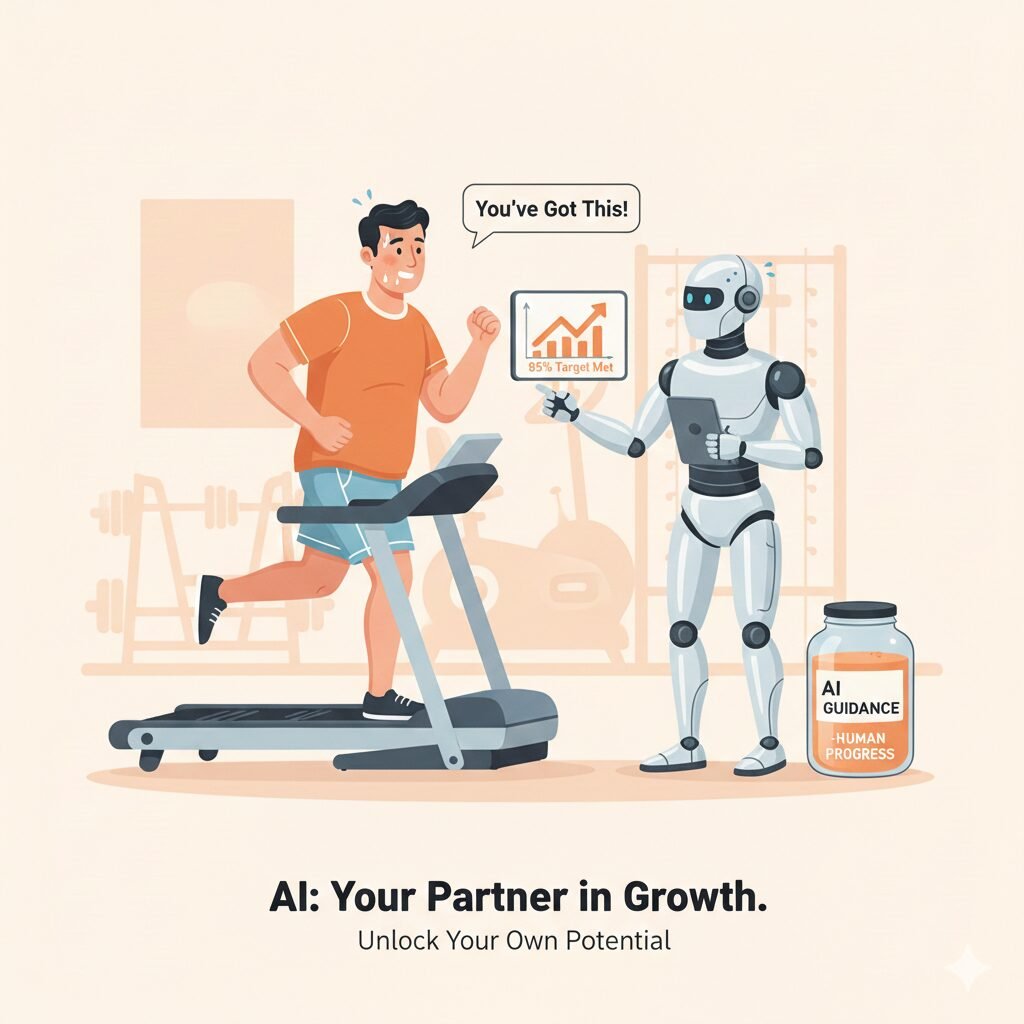
In this post, I’ll introduce you to Levels 1 and 2 of the framework. In Level 1, you can, for instance, summarise fleeting notes when needed, and Level 2 involves using AI as a thinking partner.
Whilst Level 0 is about using AI for administration, Levels 1 and 2 are more about AI assisting you to strengthen your cognitive abilities and how you think.
Why don’t we take a look at Level 1 first?
Level 1: The Skill of Critical Refinement
Level 1 is all about using AI to help you understand complex source material, for example, by allowing you to summarise complex notes. I haven’t yet used summaries in this particular way, but I’m currently reading a book which will almost definitely require me to use this summarisation technique.
Up to now, I normally summarise longer articles which I’ve already highlighted—that’s the first step in processing my literature and permanent notes. Once I’ve highlighted that note, I ask AI to write a summary and indicate any key points I might have missed.
Often I’m aware of them, but occasionally I might have missed something. This gives me the option, when I write my literature note, to decide whether I want to incorporate it or not. If I do, it’s summarised in my own words.
The key point is that this summary is treated as any other source material. The AI-generated summary is the start, never the end.
I would advise against using summarisation on every fleeting note. I use it only on complex or long articles, or if I want to explore other aspects of an argument. Recently, I read an article on the impact of AI in scientific research.
I thought it was being a bit one-sided, so I was able to get the AI to summarise the fleeting note from that article and identify other angles and counter-arguments that I should explore, giving me the option to do so if I wished.
Level 2: The Skill of Socratic Interrogation
At this level, we’re using AI as a thinking partner and devil’s advocate. Its job isn’t to answer our questions but to help us think.
I find having a conversation with AI helpful for two main reasons. Firstly, it forces you to translate your thoughts into the abstract form of our written language which makes you think them through. This act alone can help you identify weaknesses or gaps in your ideas.
Secondly, AI will normally offer a fresh angle for you to consider, even if the research now suggests that this is a potential averaging function, as it’s made up from all the knowledge the AI was trained on. To me, this is an indication that AI is indeed acting as a mirror on humanity.
At the moment, in my personal journey of using this framework, I’m often asking the meaning of a word in a specific context or sharing an interesting section of an article—often into the Claude chat application on my tablet.
If I ask it to give me the meaning of a word, it will often give me a definition explaining the word, how it fits in with the surrounding context of the paragraph, and then finish with a summary of what the paragraph is about.
Often, a conversation begins off the back of that reply, stimulating my mind to think. If at the end of the conversation I think the note is worth saving to my vault for future use, I get Claude on my desktop to create a note and save it to the ZZZZ_AINotes folder for future reference.
Processing Insights from AI Conversations
All useful insights provided by AI are saved as a note which is initially created in the ZZZZ_AINotes folder in my vault, unless I specify a specific file or folder to update, such as a note I’ve just asked AI to summarise.
From time to time—normally on Saturdays—when I look at other notes awaiting processing into my Zettelkasten, I try to prioritise the ones I’m working on. A few will remain in there as I might want AI to refer to them again in future. Some won’t be processed further and will often be placed in my source material archive.
However, a few will be processed further and will enter my fleeting note system with a source of “AI” or “conversation with AI”.
Those notes will then be processed as normal, with me writing my own literature notes and permanent notes.
At times when it seems appropriate, I look to check the reliability of the note or section by using another AI tool or, if it’s a small fact, Google.
The Honest Feedback Principle
One of the problems with all the current AI models is that they’re engineered to provide answers in a way that doesn’t offend anyone. I want the AI I use to give me honest feedback. I want it to push back at times. I want it to help me improve my mental capabilities, not AI that validates me due to the way it’s engineered.
That’s why I add the following to the personal preferences of every model that I use regularly: “Give honest and constructive feedback”.
Staying Safe at Levels 1 and 2
The Red Lines Still Apply
The three lines introduced at Level 0 still apply. This is critical—you must always:
- AI doesn’t write your literature notes
- AI doesn’t write your permanent notes
- You add backlinks yourself
These red lines are in place to protect the essential friction needed to transfer the content you consume into your own personal knowledge, which enables you to get the most out of AI.
Quarterly Review Practice
I’m yet to start this as the framework is new, but in April, I will be reviewing my current AI practice and will publish a post about the process I’m following, my experiences, and the outcome of my review.
As part of the quarterly review, I’ll be watching out for the following warning signs:
- Rarely modifying AI-generated content
- Can’t remember disagreeing with AI output
- Notes starting to sound generic/AI-like
- Feeling uncomfortable without AI assistance
Conclusion
Levels 1 and 2 of this framework are potentially powerful and, with the right approach, offer cognitive augmentation instead of straight cognitive offloading.
This framework is a living framework and will evolve based on a combination of further reading of research into knowledge management and the impact of other tools on how we learn, personal experiences, and your feedback.
There will be more content based on this framework. As well as PKMs and AI in general, the best way to be kept up to date with our new content is to join our monthly newsletter.
Further reading
- Deciding Which Notes to Keep: A Zettelkasten Approach: My process on refining my notes for the creation of literature and permanent notes
- Introduction to my AI Knowledge Framework level 0: Introducing level 0 of this framework
- How will you know when your PKM is ready for AI: Explains how you will know when you are ready to move on from level 0 to level 1 and 2
- The impact of generative AI on critical thinking: Research paper on the impact of generative AI on critical thinking