
In this second post in a five part series exploring why technology is outpacing society, I will be considering why society cannot keep up and the disruptions which can lead to a widening gap between those who have access to the technology and those that do not.
We now have a single person whose wealth is valued at over a trillion dollars. That is more than the GDP of Taiwan, which according to the latest IMF data in April 2026 was 976 billion. That comparison is for illustrative purposes only as you can’t really compare the wealth of an individual with the wealth of a nation.
Only 21 countries currently have a GDP of over a trillion dollars, out of 195 sovereign countries.
Stewart Brand’s Layers of Change
American writer Stewart Brand developed an idea that different aspects of what makes up the experience of being human today change at different rates.
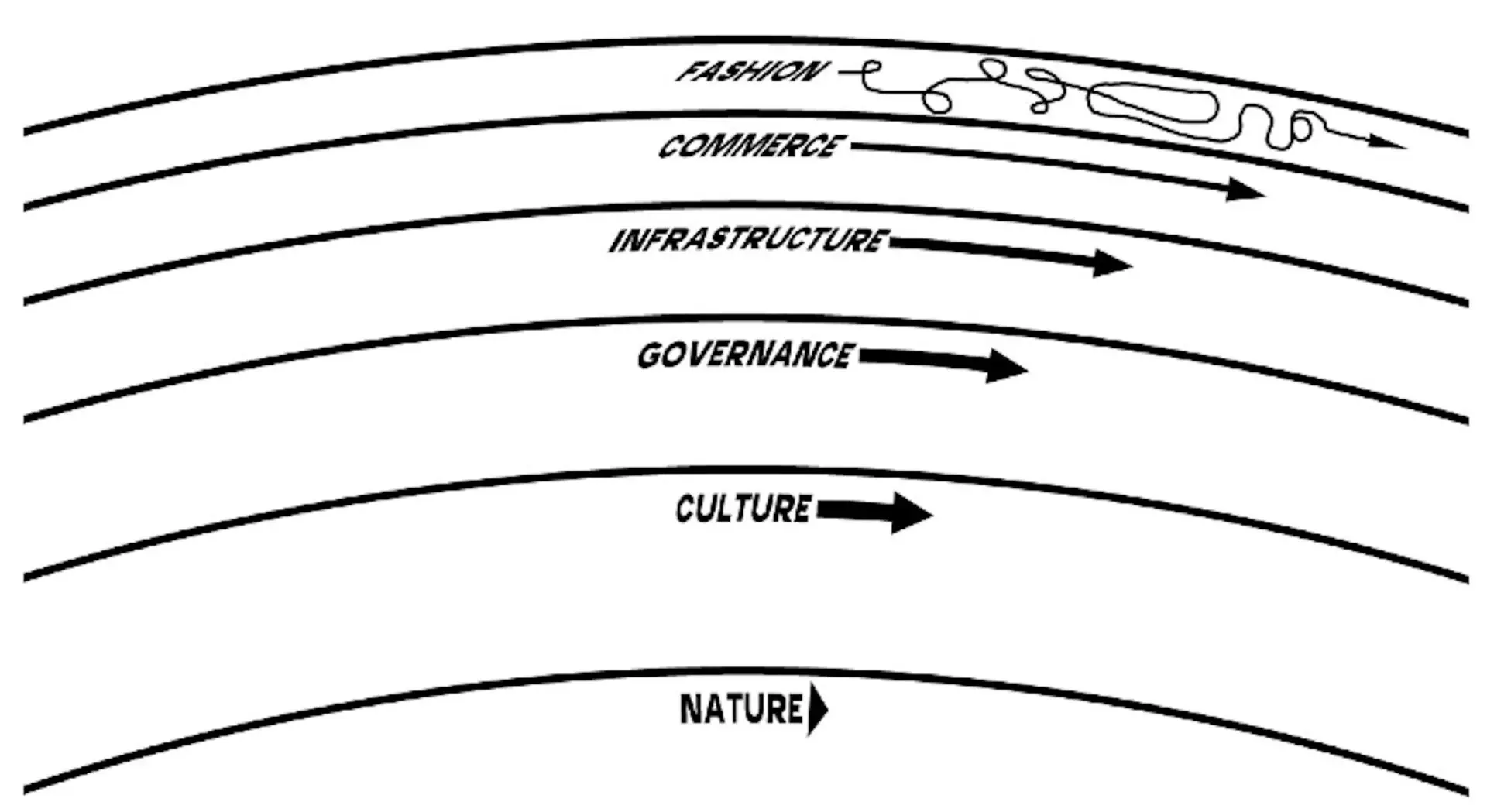
At the bottom, acting as the foundation, is nature, which changes the most slowly. At the top is fashion, which changes the quickest. Technology sits between fashion and commerce.
The higher layers give us innovation, while the lower layers give us stability. But what happens if the pace of technological progress moves too far ahead of governance and culture?
The Exponential Gap Defined
The exponential gap is the gap between those who can take advantage of these exponential technologies and those who are unable to adapt for some reason. It can divide nations, organisations, and even individuals.
This gap is widening between those who have both the access and the ability to use these technologies, which means it is a combination of having the resources, skills, and awareness to benefit from them.
Three Dimensions of the Gap
There are three dimensions to this gap:
- The individual impact. Lack of skills or resources to benefit from these technologies leaving you economically behind.
- Organisational business models failure: A company with static business processes based on older and outdated technologies get left behind as the technology shifts
- Legislation gets left behind as technological changes make the current legislation unfit for use.
The individual impact
Those of us who work in the intangible economy are employed to make intangible assets, which are assets without a physical form, such as this blog post. This sector is going through a period of disruption now.
The intangible economy grew out of computer technology and is now going through a period of disruption driven by Large Language Models and generative AI. It is rather unsettling. The World Economic Forum expects that 42% of core skills within existing jobs could change in the ten-year period between 2020 and 2030.
Living through this period, I’m not sure how accurate this forecast is, but AI is certainly disruptive and it is difficult to predict how it will go. As I have discussed previously, AI is becoming more agentic and capable of creating intangible assets itself.
Organisational business models
Kodak is a good example of this. Growing up, they were a well-known name in photography, manufacturing cameras and film. During the 1990s they had great success with disposable cameras.
In fact, they created the first digital cameras but couldn’t see how digital cameras would disrupt and impact their existing business.
Outdated legislation
In the UK, certain sports have to be broadcast on free-to-air television, such as the World Cup finals, but this doesn’t apply to streaming or catch-up services. This is due to the legislation being passed in 1996 when only 4% of us were streaming.
This World Cup, with its late-night kick-off times in the UK, has made politicians realise that the legislation needs updating to ensure it applies to streaming and catch-up services.
Conclusion
This gap isn’t evenly distributed, with some people, organisations, and countries pulling ahead while others fall behind.
Next week, the third post in the series will look at the economics of who ends up where.
You can keep up to date with my latest content by signing up for my monthly newsletter.
Further reading
- Elon Musk’s rise to becoming a Trillionaire: A BBC news article on Elon Musk’s journey to becoming a Trillionaire
- Rodolfo Ocampo, I Used to Work at Google and Now I’m an AI Researcher. Here’s Why Slowing Down AI Development Is Wise: Source for the Stewart Brand diagram and my original fleeting notes
- Azeem Azhar, Exponential: Notes taken from this book sparked this series of posts
- Proposals to keep ‘crown jewel’ sports free on streaming services: BBC news story on changes to the law regarding streaming of sport events
- Introductory guide to Large Language Model: My introductory guide which aims to explain what a Large Language model is.
- Demystifying Generative AI: My Journey from Novice to Understanding: My introductory guide on generative AI.